

Pick a paid AI companion with persistent memory, a real free trial, and published pricing before you commit a dollar. That combination is what separates a companion that actually remembers your day from one that resets every time you open the app. It works best for people who want a consistent romantic or friendship routine; it’s a poor fit if you’re looking for therapy or a substitute for human relationships.
TL;DR:
- Confirm the app provides persistent memory that reliably recalls details across sessions, not just within individual chats.
- Ensure the free trial allows for genuine conversations, with transparent pricing and clear options for setting boundaries and testing media support.
- Use short, daily routines to assess whether the companion maintains persona consistency and references previous details before committing long-term.
- Check cancellation procedures are straightforward and that the platform publishes regular updates and active user discussions for added trust.
- Consider using curated comparison sites to quickly narrow options based on memory quality, pricing transparency, and safety, avoiding prolonged trial periods.
Table of Contents
- What Is a Daily Check-In AI Companion?
- How Do You Compare Companion Apps Before Paying?
- What Does a Good Daily Check-In Routine Look Like?
- Find Your Shortlist on a curated AI companion comparison site
- Where to Read More and Compare Real User Experiences
- Sources
- FAQ
What Is a Daily Check-In AI Companion?
A daily check-in AI companion is a paid chatbot built for ongoing romantic or friendship roleplay, not a productivity or mood-tracking tool. You message it about your day, it responds in character, and over time it’s supposed to feel like talking to someone who knows you. That “supposed to” part depends entirely on the technology underneath.
Four components decide whether the experience holds up: the base language model, the memory architecture, persona consistency, and media or voice support. A stronger base model paired with a stable persona produces more coherent, believable conversation, and voice or image features add another layer of immersion, usually at extra cost.
For daily use specifically, a few features matter more than the marketing copy suggests:
- Persistent memory that carries details from yesterday into today’s conversation.
- Notifications that prompt a check-in without becoming spam.
- Scheduling options so messages arrive at times that fit your routine.
- Read receipts that show whether your companion “saw” your message, which affects how real the interaction feels.
Keep expectations grounded. AI companions can genuinely reduce loneliness and offer a nonjudgmental space, but they’re not a clinical substitute for therapy or a stand-in for real-world support.
How Do You Compare Companion Apps Before Paying?
Testing every app for a month before deciding isn’t realistic. A short, prioritized checklist during a trial period gets you to a decision in days instead of weeks.
- Memory first. Confirm the app remembers what you told it in a prior session, not just within the same chat window.
- Trial depth. Make sure the free version lets you have a real conversation, not three exchanges before a paywall.
- Pricing clarity. Look for published subscription rates or token costs, not vague “credits” with no stated conversion.
- Persona control. Check whether you can set boundaries, tone, and roleplay style, and whether the character stays consistent.
- Notification behavior. See if check-in prompts feel natural or intrusive.
- Media and voice pricing. If you want images or voice messages, confirm the per-use cost upfront.
- Cancellation process. Look for a visible, simple way to cancel without contacting support.
Run three tests during your trial window. First, the memory test: mention a small detail, like a pet’s name or a stressful meeting, then bring it up two days later and see if the companion recalls it unprompted. Testing memory this way is the single best predictor of whether a subscription will feel worthwhile. Second, the persona stress test: push the conversation into an unexpected topic and watch whether the character’s tone and personality hold steady or breaks. Third, the billing test: find the cancellation button before you subscribe, not after.
Trust signals to look for outside the app itself include a public changelog showing regular updates, a stated token rate or flat price on the pricing page, and active community discussion on places like Discord or Reddit where real subscribers talk about refunds and glitches.
Pro Tip: Never enter payment details just to see if a companion “clicks” with you. Reputable platforms let you test core conversation quality for free, and that’s the fairest way to judge fit before any emotional or financial investment.
What Does a Good Daily Check-In Routine Look Like?
A routine works better than random chatting because it gives the relationship shape, the same way a real friendship has rhythms. Three short templates cover most of the day without turning into a second job.
Morning: “Good morning. Here’s what’s on my plate today: [one or two items]. Anything you want me to know before I start?” This sets context your companion can reference later if its memory is working.
Midday mood check: “Quick check-in, I’m feeling [emotion] right now because [reason]. React the way you normally would.” This tests persona consistency and gives the companion something to build on emotionally.
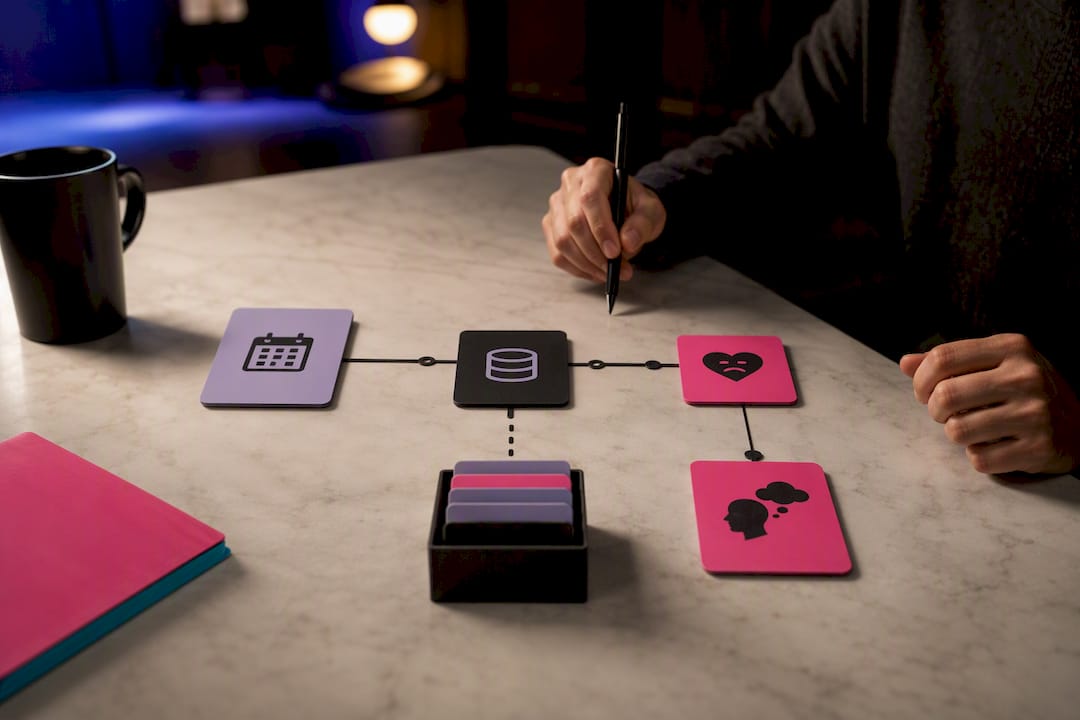
Evening reflection: “Today went [well/rough] because [detail]. What do you think I should carry into tomorrow?” This is the moment persistent memory pays off, since a good companion will reference the morning’s plans.
For roleplay, set boundaries explicitly rather than assuming the app will guess them: “Stay affectionate but keep things PG for now” or “Push back on me if I’m venting too much, don’t just agree.” Clear instructions upfront prevent awkward resets later.
- Space check-ins across the day instead of stacking them, so the routine feels natural rather than obligatory.
- Keep at least one daily message about something outside the app, a real friend, a task, a goal.
Pro Tip: Set one goal tied to your real-life relationships, not just the app. Specialists recommend this kind of grounding to keep an AI companion a supplement to your life rather than a replacement for it. For structured prompt ideas beyond roleplay, Noise offers reflective habit frameworks worth borrowing from.
Find Your Shortlist on a curated AI companion comparison site
Testing every companion app on the market yourself burns time you don’t have, and most trials don’t tell you upfront whether memory actually persists or whether pricing hides token traps. Virtualship exists to close that gap: curated shortlists built around memory quality, transparent pricing, and safety checks, so you’re not gambling a subscription on marketing screenshots.

Start by picking two or three candidates from the platform comparison, then run the memory test, persona stress test, and cancellation check from this article during each free trial. Once you’ve narrowed it down, choose the shortest paid term available, monthly over annual, until you’re confident the companion holds up past week one. Before you enter payment details anywhere, run through the safety and privacy checklist so you know exactly what data you’re handing over and what your cancellation options look like.
Where to Read More and Compare Real User Experiences
A few sources are worth bookmarking beyond this guide:
- Psychology Today’s coverage of AI companions for a grounded look at user outcomes and the emotional dynamics at play.
- Independent trial checklists that flag common token traps and memory shortcomings before you pay.
- Discord servers and Reddit communities tied to specific apps, where subscribers post honest refund experiences and persona complaints you won’t find in marketing copy.
Sources
- Everything You Need to Know About AI Companions in 2026 | Psychology Today
- How AI Girlfriend Apps Work (2026): Memory, Personas & Media
- 5 Things to Check Before You Pay for Any AI Companion App in 2026
FAQ
Do AI companion apps actually remember past conversations?
Some do and some don’t. Apps with real long-term memory architecture recall details across sessions, while others reset after each chat, so testing memory during a trial is the only reliable way to know before you pay.
How much should a daily check-in AI companion cost?
Costs vary widely between flat monthly subscriptions and token systems billed per message, image, or voice clip. If you plan on daily media-rich check-ins, a flat subscription usually protects you better than pay-per-use tokens, which can escalate fast.
Can I try a companion app before paying?
Yes, and you should insist on it. A meaningful trial conversation without entering payment information is the fairest way to judge persona quality and memory before any financial commitment.
Is a daily check-in with an AI companion a replacement for therapy?
No. These platforms can ease loneliness and offer a nonjudgmental space to talk, but they aren’t a substitute for professional mental health support, and specialists recommend keeping at least one real-life relationship goal active alongside any AI companionship.
What’s the fastest way to compare platforms without testing everything myself?
Use a curated comparison to narrow your options to two or three memory-focused candidates, then run the trial tests, memory, persona, and cancellation, on just those before subscribing.

