

Muah AI is a real, working AI companion site, so in that sense it is legit. It is not a safe place to put anything you would not want public. In September 2024 it was hacked, and the leak tied email addresses to the explicit prompts people had typed. If you have an account, treat that data as exposed. If you are deciding whether to sign up, the breach is the main fact to weigh.
This guide covers what happened, what regulators and security analysts have said, how to judge the “is it legit” question, and what to do next. We publish AI companion comparisons, so we look at these platforms the way a cautious buyer should: privacy first, features second.
TL;DR
- Muah AI is a functioning product, but it suffered a serious breach in September 2024 that exposed about 1.9 million email addresses alongside user prompts.
- Many of the leaked prompts were sexually explicit, which makes the exposure unusually risky: extortion and workplace fallout are documented concerns.
- Australia’s eSafety Commissioner has published a guide on the service, and the leaked data included requests involving child sexual abuse material, which is a serious crime.
- If you already have an account, change reused passwords, stop using that email elsewhere, and check whether you appear in the breach.
- If you are shopping for a companion app, check the data practices before the features. Our safety checklist shows how.
Table of Contents
- What happened in the Muah AI breach
- Why this breach is worse than a typical leak
- The child safety issue you should know about
- Is Muah AI legit?
- Should you still use it?
- If your email was in the breach
- What regulators say about companion chatbots
- How to judge any AI companion’s safety in 10 minutes
- What is the safest type of AI chat?
- Set boundaries before the chats get personal
- Finding a companion that fits your comfort level
- FAQ
- Sources
What happened in the Muah AI breach
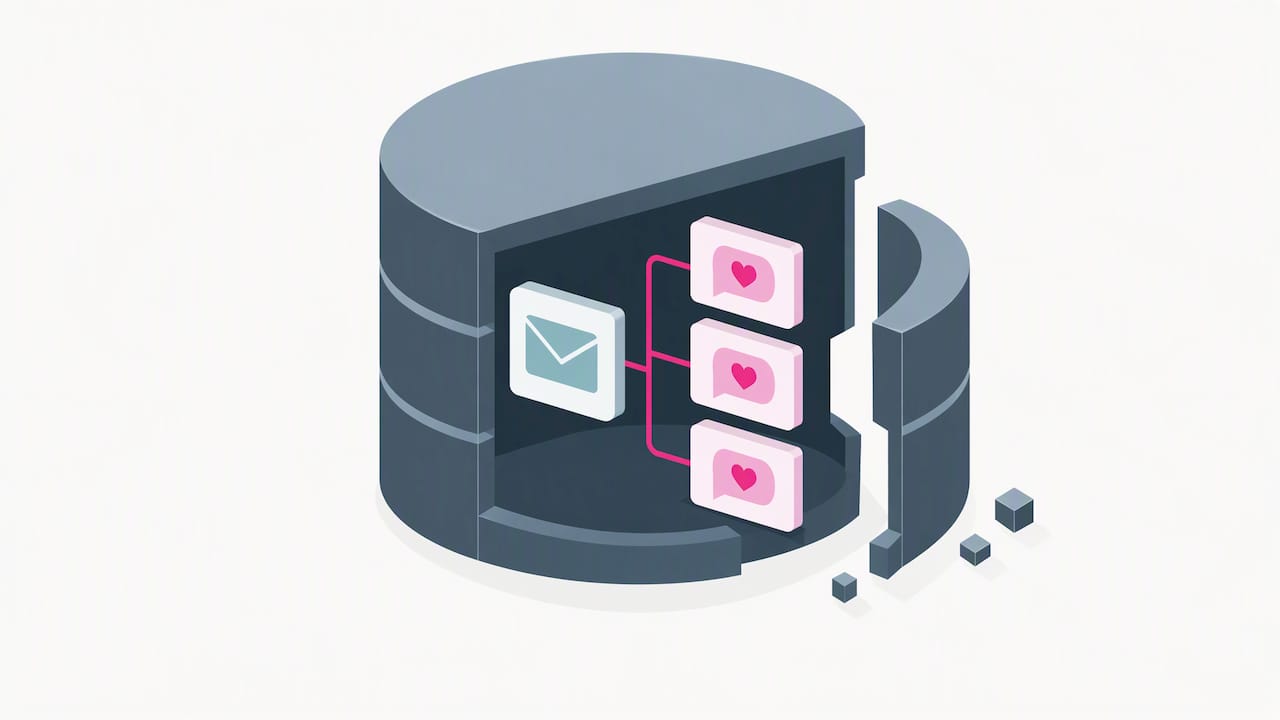
In September 2024, the “AI girlfriend” site Muah.AI was breached. Have I Been Pwned, the breach notification service, lists 1.9 million email addresses exposed alongside prompts used to generate AI images. It describes many of those prompts as highly sexual. It also flags the breach as sensitive, which means it is not searchable by the public. You have to verify ownership of an email address to see your own result.
CyberInsider’s report, published on 9 October 2024, dates the breach to 17 September 2024 and says it exposed chatbot interactions as well as emails. Kotaku summarized the reporting from 404 Media in the same week.
The key issue is not that an AI site was hacked. Many companies are. It is what sat in the database: a person’s real email address next to a record of their most private requests. For many people the email is their name, their employer or their social profile.
Why this breach is worse than a typical leak
A leaked password can be changed in five minutes. A leaked record of intimate fantasies cannot be changed. That is the core difference.
Legal analysts at Linklaters wrote that this breach stands apart from ordinary ones and presents extreme risks for the people affected. They cite reports that the information was being used for extortion, including pressure on employees to give access to company systems. A Mondaq republication of the same analysis describes how threat actors target people they see as high value.
In practice, the risks look like this:
- Blackmail. Someone emails you quoting a prompt and demands payment.
- Workplace exposure. Work emails in the leak can be matched to employers. Anyone in finance, IT, government or a similar role is a more attractive target.
- Phishing that feels personal. A scammer who knows your specific prompts can write a message that feels frighteningly real.
- Reputational harm. Even if no one contacts you, you cannot know who has the file.
A sextortion email you receive does not mean the sender has more than they claim. Many such emails are bluffs. But with this breach, a sender may really hold a quoted prompt, so do not assume it is a bluff.
The child safety issue you should know about
There is a second problem that concerns the platform’s wider use. Australia’s eSafety Commissioner has published a guide on Muah.AI. It lists the minimum age as 18+, according to the service, and describes it as a chatbot for uncensored text chats and for exchanging and generating images. It also warns about reports that leaked chat data included attempts to generate child sexual abuse material.
The reporting was grim. Kotaku, drawing on 404 Media, said many users appeared to be trying to use the chatbot to simulate sexual abuse of children. Whatever a platform’s filters do or do not catch, creating or seeking such material is a serious crime in many countries, and the consequences can include sex offender registration. If you ever see that content, do not copy or share it. Report it to the National Center for Missing & Exploited Children in the US, or to local police elsewhere.
For parents: the site runs in a browser and is aimed at adults. If a teen in your house uses companion sites, talk to them about it directly rather than relying on settings alone.
Is Muah AI legit?
The word “legit” covers three separate questions. The answers differ.
| Question | Short answer |
|---|---|
| Is it a real service that works? | Yes. It is an operating AI companion platform for adults, with chat, images and voice. |
| Is it a scam in the sense of taking money and delivering nothing? | Opinions are mixed. Check recent reviews and the refund terms yourself. |
| Is it trustworthy with your data? | The 2024 breach is a strong reason to say no, or at least not for anything sensitive. |
On the second row, user reviews are the best evidence. The Trustpilot page for muah.ai shows a mix of ratings and a notice that the platform does not fact-check reviews. Read the most recent ones, not the oldest, and look for patterns about billing and support rather than single angry posts. MakeUseOf has written about the site in the context of a spam campaign and described a weak experience on cheap AI companion apps generally: paywalls, missing features and unreliable support. Treat any one outlet’s view as one data point.
Reddit threads also come up in search for this topic. They are useful for spotting complaints, but they are anecdotal, and some accounts are people with a grudge or with something to promote. Use them to find questions to ask, not as proof.
Should you still use it?
That is your call, and a reasonable adult can decide either way. Our view is simple: the breach showed that this company’s data was not protected well enough, and nothing we have seen lets us tell you that it has been fixed. We have not tested the current security setup, so we will not claim it is better or worse today. If you use it, assume anything you type could one day become public.
If you want to keep using it, reduce the damage:
- Use an email address created only for this purpose, with no real name in it.
- Use a unique password that you use nowhere else.
- Do not upload photos of real people, including yourself. Our photo-sharing privacy tests explain why.
- Do not type real names, workplaces, addresses or other identifying details into chats.
- Pay with a method you can cancel easily, and save your confirmation emails.
If your email was in the breach
Do these steps in order.
- Check. Search your email at Have I Been Pwned. Because the breach is marked sensitive, you will need to confirm you own the address.
- Change passwords. Change the password on any account that shared the Muah login, starting with email and banking. Turn on two-factor authentication.
- Do not pay anyone. If an extortion email arrives, do not reply and do not pay. Keep the message, take screenshots and note the date.
- Report it. In the US, you can report extortion to the FBI’s Internet Crime Complaint Center. If the message targets your work, tell your IT or security team early. Linklaters notes that attackers have tried to use exposure as leverage against employees.
- Get support. If you feel frightened or ashamed, a counselor or therapist can help. Shame is exactly what extortionists rely on.
- Ask for deletion. Contact the service and request account deletion. Keep in mind it may not remove data that has already leaked.
If you are outside the US, your local cybercrime reporting body or data protection authority is the right place to go instead.
What regulators say about companion chatbots
The breach is not an isolated question about one brand. Regulators have been paying attention to how AI companions treat intimate data.
Lawyers at Fenwick summarized the FTC’s warnings in five “don’ts” for AI chatbots, published in July 2024. They say the agency treats it as unfair or deceptive to quietly adopt looser data policies after a user has formed a bond with a companion. They also note that companies are responsible for making sure their chatbots do not mislead people.
The Center for Democracy and Technology has described dark patterns in AI chatbots, meaning design choices that work against the user’s interests. Its taxonomy is a useful lens when you read any companion app’s sign-up flow: defaults that share data, consent screens that push you to accept, and obstacles to closing an account.
None of this proves that any single app is acting badly. It tells you what to look for.

How to judge any AI companion’s safety in 10 minutes
The lesson of this breach applies to every app in the category. Before you give any companion service an email address, run through these checks.
- Account design. Can you use it without a real email? Is there an obvious delete-account button?
- Privacy policy. Does it say what happens to your chats, who can read them, and how long they are kept? Vague wording such as “reasonable security measures” with no detail is a weak sign.
- Training use. Does it say your conversations are used to train models? Can you opt out?
- Payment and billing. Is the price clear before checkout? Is cancellation as easy as sign-up?
- Age and content controls. Does it check age sensibly, and does it state what it prohibits?
- Track record. Search the service’s name with “breach” and “hacked”, and check Have I Been Pwned.
- Exit plan. Can you export or delete your chats?
Our guides go deeper on each point. Start with what to check before you pay, then read what the data shows about companion privacy. If you want a stronger technical setup, see our look at encrypted chat apps and prompt protection (the page is titled The Encrypted AI Chat Apps That Actually Protect Your Prompts). For a worked example of the same check on another app, see our 10 minute safety review of Anima.
What is the safest type of AI chat?
Readers often ask which AI chat is the safest. No honest reviewer can name one that is risk free, because every online service keeps some data. The safer types share traits:
- Local or offline processing, where your chats stay on your own device. Our offline companion tests show how to verify the claim.
- End-to-end encryption, which is rare among companion apps. If a vendor says it has it, ask whether it covers the model’s processing or only transport.
- Mainstream, SFW-focused platforms with clear policies, a deletion option and a history of responding to security problems.
- A minimal-data mindset on your side, which matters more than any setting.
The NSFW side of the market carries extra risk because the content itself is more damaging if leaked. Our guide to NSFW policies and age checks explains the two main platform types and what separates them.
Set boundaries before the chats get personal
The pull of a companion app is that it feels private, and that feeling is what leads people to share more than they would anywhere else. Decide in advance what you will never type. Names, workplaces, financial details, health information and photos of real people are good starting items. Our piece on setting limits with an AI companion gives a way to do that.
Finding a companion that fits your comfort level
If the breach has made you rethink, you do not have to give up on the idea of an AI companion. You can choose one on the basis of what it does with your data, not only what it can generate. We compare platforms for romance, friendship and roleplay, with privacy, pricing, voice, video and customization side by side on our AI companion comparison. If you are curious about building a character, our guide to creating an AI girlfriend walks through the options. We update our comparisons, and our evaluations focus on real use rather than marketing copy.
FAQ
Is Muah AI safe on Reddit’s reports?
Reddit posts about the site are mostly negative, but they are anecdotal. The strongest evidence is not Reddit but the documented breach, listed by Have I Been Pwned, and the warnings from regulators. Use forum posts to spot recurring complaints, then verify them yourself.
Has Muah AI been hacked?
Yes. In September 2024, a breach exposed about 1.9 million email addresses and the prompts linked to them. Have I Been Pwned classes it as a sensitive breach. You can check whether your address is included by verifying it on that site.
What should I do if I get a blackmail email about Muah AI?
Do not pay and do not reply. Save the message, change your passwords, turn on two-factor authentication and report it. In the US, that means the FBI’s Internet Crime Complaint Center. If it mentions your employer, tell your security team.
What is the safest AI chat to use?
No AI chat is risk free, but safer options process data locally or encrypt it, have clear deletion tools and avoid collecting more than they need. Use a separate email and share no identifying details. Our safety checklist shows how to test these points.
Sources
- Have I Been Pwned: Muah.AI data breach
- CyberInsider: AI girlfriend site Muah.AI hacked
- Kotaku: AI companion site hacked, data reveals users trying to simulate child abuse
- eSafety Commissioner: Muah.AI
- Linklaters: The muah.ai data breach, extortion threats and cyber vulnerabilities
- Mondaq: The Muah.AI data breach
- Trustpilot: Muah reviews
- MakeUseOf: Fake AI spam campaign
- Fenwick: FTC outlines five don’ts for AI chatbots
- Center for Democracy and Technology: Dark patterns in AI chatbots
- National Center for Missing & Exploited Children CyberTipline
- FBI Internet Crime Complaint Center

